Scraping and sanding
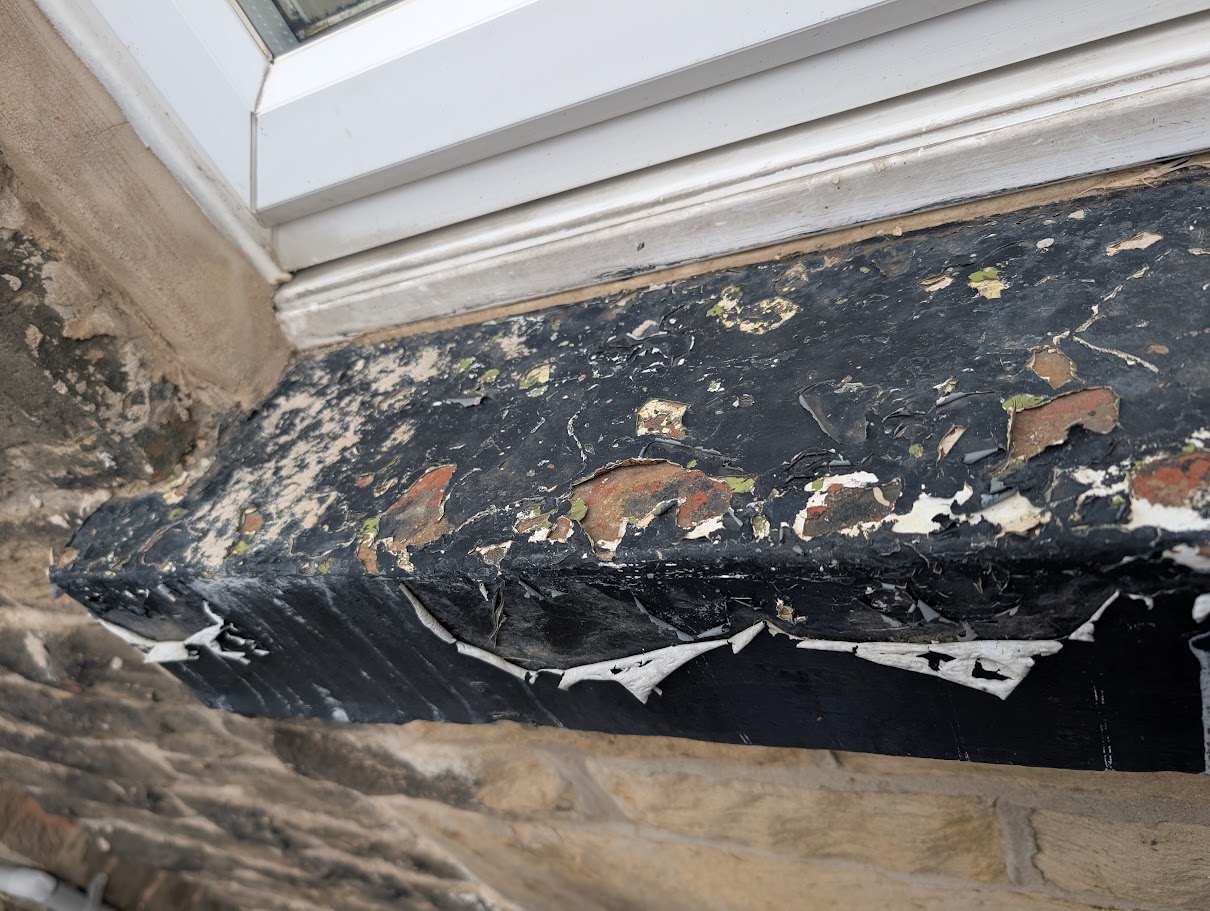
Loose and flaking old paint was scraped away from the two window sills. The remaining surfaces were sanded to remove unstable edges and provide a suitable base for the next stages.

Two sills and three lintels might seem like a small painting job. In reality, damaged surfaces, old flaking coatings and areas of crumbling stone called for careful preparation and repair before the final finish.
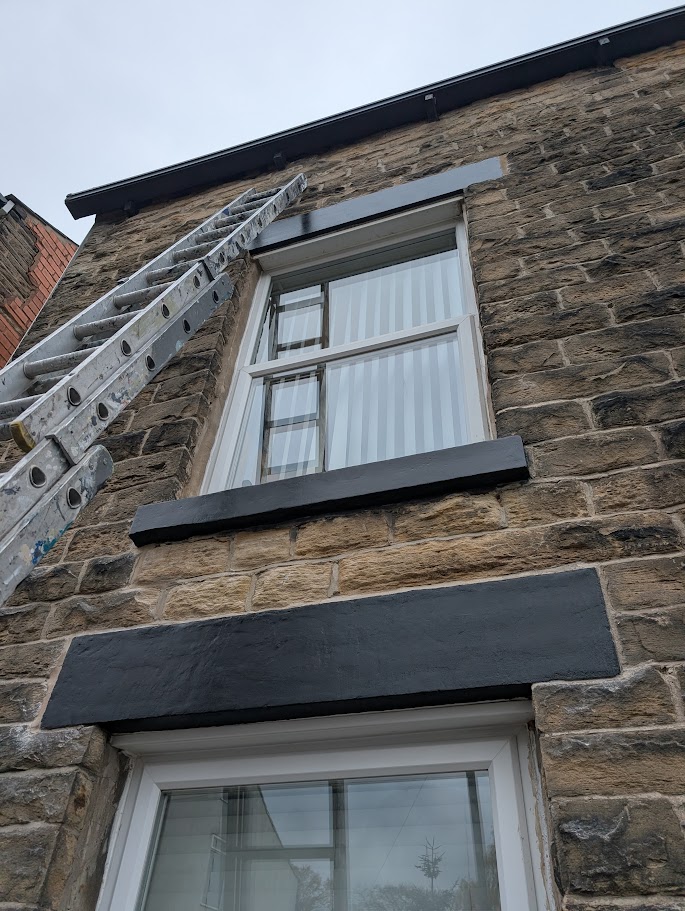
This project involved restoring two weathered exterior window sills and three lintels. The existing painted sills had deteriorated badly, with thick layers of loose, flaking coating and pitted surfaces beneath. Two older lintels had loose material and decayed areas that also needed attention.
Underneath the bedroom window, part of the original stone had deteriorated and was crumbling. Rather than simply painting over the defect, the damaged profile was rebuilt locally with exterior filler before the surfaces were sanded and decorated.
The aim was a clean, smart appearance while paying proper attention to the substrate beneath the new paint.
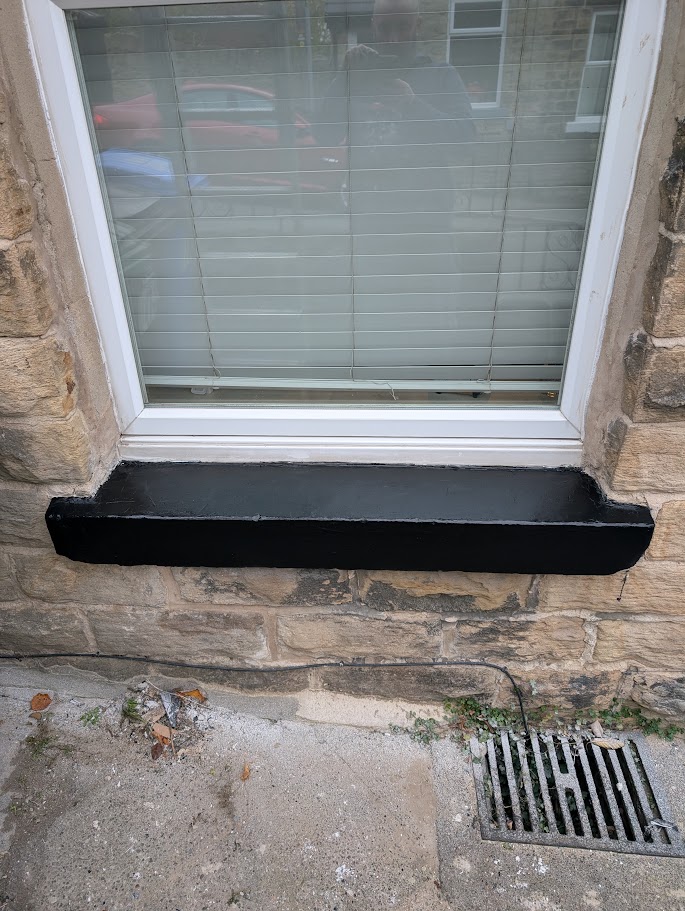
The condition of the lower window sill before work started shows why preparation was essential. The completed photographs show the renewed dark finish after repairs and two finishing coats.
A small area does not always mean a quick job. On this property, the condition of the existing coating and stonework dictated the sequence of work.
Loose and flaking old paint was scraped away from the two window sills. The remaining surfaces were sanded to remove unstable edges and provide a suitable base for the next stages.
Primer was applied to the prepared sills and the older lintels before filling. This formed part of the preparation programme for the weathered, previously coated surfaces and exposed areas.
Exterior filler was used on holes, pits and craters in the stone. The two deteriorated lintels also needed local filling to smooth the areas where the surface had begun to break down.
Below the bedroom window, the stone had deteriorated and was crumbling. This area required more substantial local filling to rebuild the missing profile before painting could proceed.
After the filling work, the repaired areas were sanded back to soften high spots and create a neater, more consistent finish across the sills and lintels.
Two coats of Zinsser AllCoat Exterior paint were applied after preparation and repairs. The completed dark finish gives the window sills and lintels a much tidier, more consistent appearance.
Once the paintwork was complete, the immediate working area was swept and left tidy. The finished result might look like a straightforward change of colour, but the photographs tell a different story: extensive preparation, priming, localised stone repairs and careful finishing.
It is a useful example of the attention smaller exterior decorating jobs can require — particularly when old coatings are failing or the surface has weathered over time.
The filler work described here was a local surface repair, not a claim of structural stone restoration. Significant or ongoing movement, water ingress or structural deterioration calls for separate investigation.
Ask about your exterior paintwork ↗All 25 photographs supplied with the project are included, from the initial condition through priming, filling and the finished result. Select a photograph to view it larger.
Tell us which sills, lintels, doors or other exterior surfaces need attention. Photos of the affected areas help us assess the condition and discuss the next steps.
Tell us what you have in mind. We'll help you take the next step.